 CONTACT SALES →CONTACT SALES →
microSD / TF Cards
Removable flash memory for compact devices, imaging and embedded systems. Compare six range priorities and choose around host support, recording patterns and operating conditions.
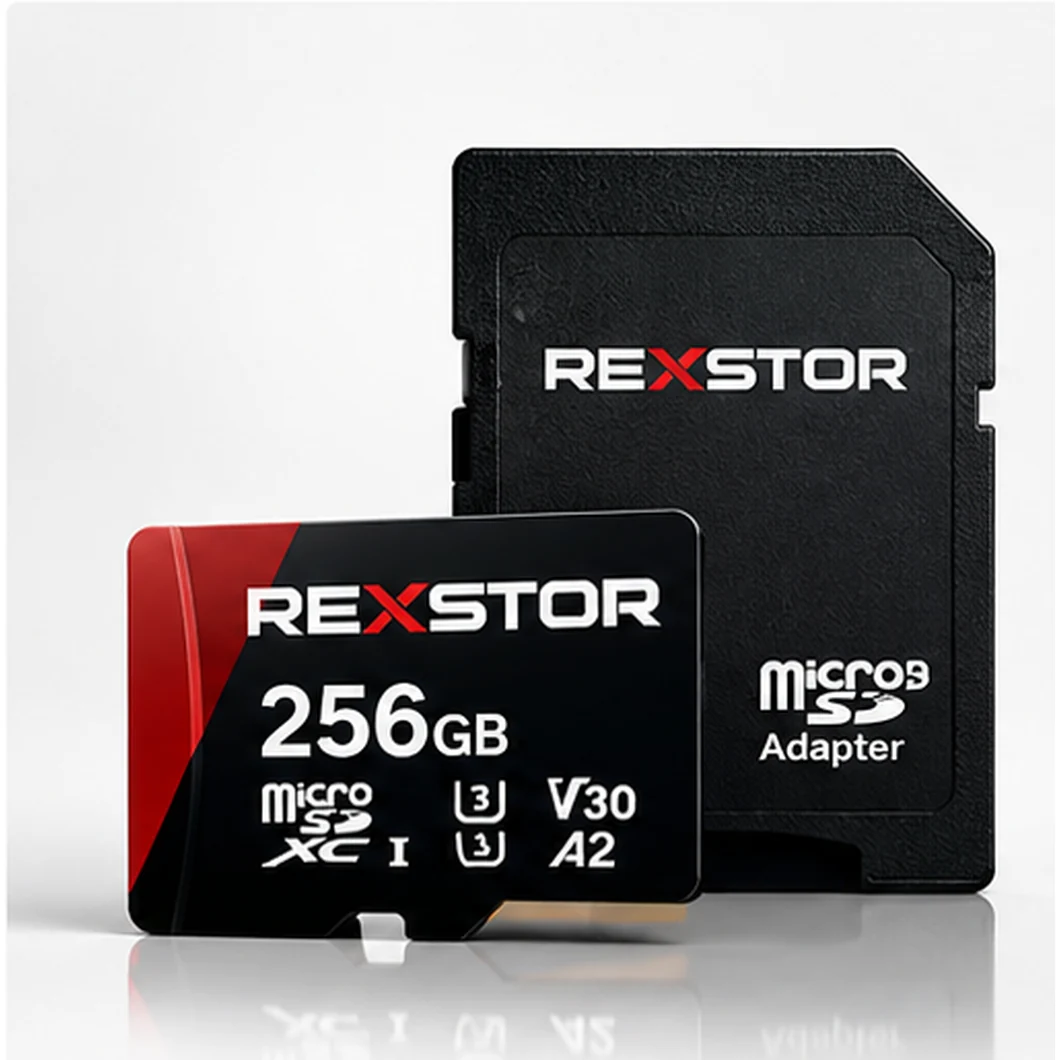
A microSD card is a compact removable flash-storage format measuring 15 × 11 × 1.0 mm. It is also commonly called TF, a legacy name from the TransFlash format.
Small size does not determine speed, endurance or environmental capability. Review the exact card specification alongside the host’s supported capacity standard and interface.
| Characteristic | Full-size SD | microSD / TF |
|---|---|---|
| Physical dimensions | 32 × 24 × 2.1 mm | 15 × 11 × 1.0 mm |
| Typical physical fit | Full-size SD slot | microSD slot; a compatible adapter may provide full-size mechanical fit |
| Main checks | Host capacity standard, bus support and recording requirements | The same checks apply; compact size is not a speed or endurance rating |
| Explore format | SD guide → | microSD / TF guide → |
Select a compatible card for the recording settings.
Capture local imagery and sensor data.
Removable media for supported boot and data workflows.
Evaluate continuous-write and overwrite requirements.
Match the slot, capacity standard and bus support specified by the host. An adapter can change the mechanical fit without upgrading the card’s electrical interface or speed class.
For recording, match the host’s required speed-class marking. Peak read speed is not a guarantee of continuous write performance.
Continuous overwrite recording has different demands from occasional file storage. Request the endurance information applicable to the exact configuration and recording pattern.
Consider error handling, recovery after interruption and firmware behavior together with the NAND configuration. Keep a backup of important data.
Define temperature, power cycling, vibration and storage intervals. Environmental ratings and retention statements must be checked for the selected part number.
For equipment programs, discuss configuration control, change notifications and availability instead of choosing only by headline capacity.
Choose a range by the application’s priorities, then qualify the exact configuration. A range label is a starting point for selection, not a substitute for a product specification.
| Range | Selection priority | Typical application context | Product / next step |
|---|---|---|---|
| Essential | Everyday compatibility and practical capacity choices. | Consumer devices and ordinary capture/file storage. | Essential microSD Card — Consumer |
| Performance | Sustained capture capability and host bandwidth. | Higher-throughput photo, video and data capture. | Request a configuration → |
| High Endurance | Write/overwrite workload and retention requirements. | Continuous recording and monitoring. | Request a configuration → |
| Industrial | Environmental fit, validation and lifecycle planning. | Equipment, gateways and field systems. | Request a configuration → |
| Industrial Plus | More demanding validation and data-handling requirements. | Long-life and application-critical equipment. | Request a configuration → |
| Automotive | Vehicle-program qualification and configuration requirements. | In-vehicle recording, infotainment and connected mobility. | Request a configuration → |
Essential microSD in the Consumer catalogue. Review the available configuration for your host.
Use these application guides to define the environment and workload. Match the chosen product and qualification requirements to the complete system.
Explore use cases, design considerations and integration requirements.
Do not decide by size or capacity alone. Evaluate sustained writing, overwrite endurance, host compatibility and the exact configuration.
Read speed does not establish sustained recording capability. Follow the host’s required speed-class marking and card compatibility guidance.
Background on standards and selection terminology: SD capacity standards and dimensions · Speed-class markings · microSD / TransFlash history. Product-specific claims must be checked on the selected reference.
Share the host platform, use case, workload and lifecycle requirements for your project.
